
PIP Consulting’s training model is designed to facilitate positive change through meaningful cognitive and emotional paradigm shifts by identifying and changing limiting beliefs. This way, participants buy into coaching, training and mentoring fully and change their behaviour, because beliefs are the rules that govern your behaviour. Your beliefs may empower and allow you to be the best version of yourself and live your values but they may also prevent you from becoming the best version of yourself. Your beliefs filter what you see and hear – affecting how you behave in your daily life. The best way to change someone’s behaviour is through insight. Insight happens once delegates buy into new information, ideas and different ways of thinking. Once delegates believe the information they hear and it makes sense to them, their behaviour will automatically begin to change.
All our courses are accredited through SETA – SETQAA and aligned to unit standards.
We change our behaviour when we gain insight.
The courses we offer are:
- EMOTIONAL INTELLIGENCE COURSE (1 day or 2 day workshop)
- ASSERTIVENESS TRAINING (2 day workshop)
- SITUATIONAL LEADERSHIP & MANAGEMENT: (2 day workshop)
- PROFESSIONALISM IN THE WORKPLACE (1 day workshop)
- SELLING SKILLS TRADING (2 day workshop)
- CUSTOMER SERVICE EXCELLENCE (2 day workshop)
EMOTIONAL INTELLIGENCE COURSE (1 day or 2 day workshop)
“Anyone can be angry – That is easy, but to be angry with the right person, to the right degree, at the right time, and for the right purpose, that is not easy” – Aristoteles, 2000bc
Emotional intelligence (EQ) is the non-cognitive skills and competencies we need to successfully communicate and interact with people in our daily lives. Such insight allows us to manage our own and other’s emotions and to read, understand and manage our own and others’ emotional states and to guide thinking and actions.
People with higher EQ tolerate stress better and they have higher levels of impulse control. They also tend to be more flexible and realistic and to solve a range of problems as they arise. Emotional Intelligence allows us to maintain a positive attitude, particularly in the face of adversity and to feel satisfied with life.
Low emotional intelligence is one of the biggest causes of conflict in the workplace and in people’s personal lives. Organisations that employ staff with higher levels of EQ have a distinct advantage because there is less conflict and more co-operation among them.
The good news is that emotional intelligence can be learned, and transferred to others, especially by leaders such as HR Managers with high EQ who lead by example.
SYMPTOMS OF LOW EMOTIONAL INTELLIGENCE
Low EQ is any manager’s worst nightmare because unhealthy levels of EQ in the workplace usually produce poor listeners and right-fighters (people who cannot possibly be wrong.) They will bully anyone who opposes their ‘no-gray-area’ thinking. People with low EQ are self-centred and petty. They take everything personally and have low tolerance for frustration, which leads to short-fuse behaviour, and if they happen to be in management they will use every opportunity to ‘power-trip.’ Power-tripping is an attempt to elevate one’s own low self-esteem and feelings of powerlessness by putting others down. Bullies and gossipers suffer from extreme low self-esteem.
The resulting behaviours of low emotional intelligence are:
Volatile emotions
- Outbursts
- Temper tantrums
- Mood swings
- Over-reaction
- Hypersensitivity
- Inability to take criticism
- Jealousy
- Inability to forgive
Dependence
- Inappropriate dependence on others
- Being easily influenced
- Indecisiveness
- Making over-hasty judgments
- Fear of change
Need for excitement
- Need for immediate attention
- Needing instant gratification
- Impulsiveness
- Superficial values
- Thoughtlessness
- Lack of or poor social skills
- Inability to control finances
- Disloyalty
Self-centeredness
- Being demanding
- Lack of responsibility
- Being insensitive to other people’s needs and feelings
- Lacking empathy
- Selfishness
- Low self-esteem
- Attention-seeking
- Frequent ‘fishing’ for compliments
- Needing validation from others.
THE CONSEQUENCES OF LOW EMOTIONAL INTELLIGENCE
People with low emotional intelligence tend to have problems with communication which leads to conflict, misunderstandings and worse, broken relationships as a result of back-stabbing, bullying, manipulative tactics, coercion, victim behaviour, arrogance, blame and gossiping.
Arrogance, blame, coercion and victim behaviour are indicators of low EQ because the result is always the same – refusal to accept responsibility for unproductive behaviour and/or mistakes.
COURSE OUTLINE
- Interpersonal (self-awareness and self-expression):
- Self-Regard (being aware of, understanding and accepting ourselves in spite of our flaws and shortcomings);
- Emotional Self-Awareness (being aware of and understanding our emotions);
- Assertiveness (expressing our feelings and ourselves non-destructively);
- Independence (being self-reliant and free of emotional dependency on others);
- Self-Actualisation (setting and achieving goals to actualise our own potential);
- Interpersonal(social awareness and interaction):
- Empathy (being aware of and understanding how others feel);
- Social Responsibility (identifying with and feeling part of our social groups);
- Interpersonal Relationship (establishing mutually satisfying relationships);
- Stress management(emotional management and control):
- Stress Tolerance (effectively and constructively managing our emotions);
- Impulse Control (effectively and constructively controlling our emotions);
- Adaptability(change management):
- Reality Testing (validating our feelings and thinking with external reality);
- Flexibility (coping with and adapting to change in our daily life);
- General mood(self-motivation):
- Optimism (a positive outlook and looking at the bright side of life);
- Happiness (feeling content with ourselves, others and life in general);
- Problem Solving (generating effective solutions to problems of an interpersonal and interpersonal nature);
COURSE OUTCOMES
Delegates will…
- Learn how to apply emotional intelligence;
- Introspect and accept responsibility for their thoughts, words and actions;
- Become more self-aware and begin to pay attention to their inner-states;
- Learn why they lose motivation and how to get their motivation back;
- Learn how to converse with others in a productive way when things go wrong;
- Commit to stop their own unproductive behaviours and better understand and know what to do about others’ unproductive behaviours;
- Determine their stress analysis score and strategise solutions;
- Write down goals in order to regain focus and direction;
- Learn how to become more adaptable to change;
- Accept responsibility for their attitude and moods;
- Embrace the ten life laws that can change their lives.
SOME BENEFITS OF EMOTIONAL INTELLIGENCE
- Improved communication – willingness to really listen, speak with respect and resolve conflict amicably
- Insight into others’ and own behaviour
- More influence
- Buy-in from others due to improved communication and interaction with staff, colleagues, clients etc
- Improved body language
- More empathy and compassion for others
- Fewer outbursts
- Ability to read others’ emotions
- Improved stress management
- Less impulsiveness
- Better decision-making
- Improved problem solving
- Independence
- More assertive, less passivity, submissiveness, aggression and abuse
- Healthy self-regard
- Self-actualisation and helping others to self-actualise
- More respectful workplace
- Quality relationships
- More flexible and adaptable
- Acceptance of responsibility and accountability
- Higher self-motivation due to increased self-confidence, focus and direction
- Optimism and happiness.
ASSERTIVENESS TRAINING (2 day workshop)
“You have the right to say NO, without feeling guilty” ― Manuel J. Smith
Assertiveness is the extent to which a person is able to express their needs, wants, expectations, feelings, opinions and beliefs in direct, honest and appropriate ways, as well as exercise their legitimate authority in order to get a team, group or individual to accomplish requested tasks or activities.
Who should attend?
Anyone who regularly displays the following behaviours:
- Submissiveness/manipulative;
- Passivity;
- Aggression;
- Abusiveness.
Learn how to manage your emotions in the workplace and at home and how to express yourself in an appropriate way.
COURSE OUTLINE
- Determinants Of Human Behaviour;
- Self-Perception Assessment;
- Reasons For Acting Assertively – Some Practical Considerations;
- Re-framing:
- Who is in charge?
- Power maps;
- Beliefs;
- Rights and responsibilities;
- Responsibilities;
- Overriding responsibilities;
- Feelings;
- Changing Your Behaviour:
- Types of verbal responses;
- Dealing with specific situations.
COURSE OUTCOMES
Delegates will…
- Learn what assertiveness is and is not;
- Learn how to stop being aggressive, abusive, passive and submissive and to become assertive instead;
- Understand their own and others’ behaviour better;
- Learn how to deal with their own feelings;
- Begin to set boundaries for others;
- Begin to communicate clear messages;
- Know how to hold respectful conversations instead of remaining quiet;
- Gain increased confidence as they practice the skills;
- Understand how to deal with difficult people and situations;
- Practise the art of saying “no”;
- Move awkward situations forward;
- Manage conflict instead of avoiding or becoming aggressive or abusive;
SITUATIONAL LEADERSHIP & MANAGEMENT: (2 day workshop)
“When dealing with people, remember you are not dealing with creatures of logic, but creatures of emotion” – Dale Carnegie
Leadership is based on the ability of an individual to get one or more people together and let them function effectively as a team, being motivated to preform activities in order to achieve set objectives.
Management is the process of co-ordinating and integrating work related activities in order to complete their tasks and activities effectively and efficiently with and through people.
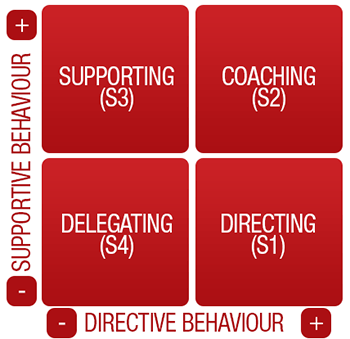
‘Situational leadership’ is a term that can be applied generically to a style of leadership, but that also refers to a recognised, and useful, leadership model. In simple terms, a situational leader is one who can adopt different leadership styles depending on the situation. Most of us do this anyway in our dealings with other people: We try not to get angry with a nervous colleague on their first day; we chase up tasks with some people more than others because we know they’ll forget otherwise.
The most important role of a Leader and Manager is to GROW THEIR PEOPLE.
COURSE OUTLINE
- Emotional Intelligence for Leaders;
- Leadership:
- The Characteristics Of A Responsible Leader;
- Leadership Powers;
- Leadership Styles;
- Situational Leadership;
- Communication: Personal Influencing Style Assessment.
- Management:
- Management Functions;
- The Responsibilities Of A Manager;
- Management Skills;
- Management Roles;
- What Makes A Manager Successful?;
- General Management Tasks;
- Planning;
- Organising;
- Control.
COURSE OUTCOMES
Delegates will…
- Understand and begin to apply emotional intelligence;
- Manage and lead more effectively, using the Situational Leadership model;
- Write an aligned team strategy for immediate implementation;
- Gain more respect as a leader and manager of people;
- Have more influence with their direct reports and others;
- Be willing to listen to new ideas;
- Introspect therefore willing to make necessary changes;
- Define what leadership and management are;
- Create a collaborative workplace;
- Be a more responsible leader;
- Identify the keys to effective leadership;
- Plan self-development;
- Motivation;
- Goal setting;
- Learn how to fully utilise SWOT analysis;
- Learn difference between leading versus administering;
- Delegate more effectively;
- Identify own personal influencing style;
- Identify own personal values and principals;
- Write own personal and team mission statement;
- Effective communication;
- Establish more effective teamwork;
- Learn what performance assessments are and how to use it.

PROFESSIONALISM IN THE WORKPLACE (1 day workshop)
“Professionalism is not sportsmanship. If you don’t succeed, you won’t be in your profession for long. In our society, it’s not about good or bad. It’s about who’s on top”. Chili Davis
‘Professionalism’ is the term used to describe the internationally accepted standards or expectations that society has of people’s conduct and levels of competence in the workplace. These standards of conduct are set by society, management, our peers, our customers, our staff, our families and of course, us.
Being professional means that your conduct has to remain above reproach at all times and must fit in with the circumstances and situations in which you find yourself. Being professional requires that you comply willingly with the highest ethical standards and that you have a deep awareness and understanding of appropriate business behaviour in various cultures. It also requires a high degree of knowledge, skill, ability, attitude and sound judgement.
Your professionalism is judged by others through the following—and other—behaviours and competencies:
- Image
- Business etiquette
- Telephone and e-etiquette
- Manners
- Communication: verbal, non-verbal (body language) and written
- Relationships
- Competence
- Responsibility and accountability
- Trustworthiness
- Empathy and compassion
- Respectfulness
- Emotional maturity
There is no greater compliment than someone imitating and admiring us, but admiration, for whatever reason, comes with great responsibility to do the right thing and to ensure that our conduct remains above reproach. Our behaviour today will help to shape tomorrow’s leaders.
SOME OF THE OTHER BENEFITS OF ACQUIRING PROFESSIONALISM SKILLS
- Personal growth and development
- Higher self-esteem
- Motivation
- Higher emotional intelligence
- Sought-after ‘trusted-business-advisor’ status
- More effective leadership
- Respect
- Better communication
- More influence
- Greater wealth.
- Value to the organisation
COURSE OUTCOMES
Delegates will…
- The organisations expectations of them with regards to their conduct
- Improving their image, grooming and deportment
- Minding their manners
- Acting professionally at all times in the workplace and with clients
- Improving their own professionalism skills and knowledge
- Acting more respectfully in the workplace and with clients
- Being more caring and compassion
- Communication skills – verbal; non-verbal; telephonic and electronic
- Acting with more consideration and respect to each other
SELLING SKILLS TRADING (2 day workshop)
“To succeed in sales, simply talk to lots of people every day. And here’s what’s exciting – there are lots of people!” Jim Rohn
Sales-driven organisations succeed by virtue of the quality and performance of their sales staff and managers.
Most successful sales people have something in common. They all have a passion for selling and most of them have a personal development plan – a strategy. Achievers plot and plan constantly. Some highly effective sales people work with sales coaches but there are some who are born self-starters. Even the driven few are surrounded by people who cheer them on – like a really well-trained sales manager / coach.
Passion and action are the driving forces behind success in sales. Unless sales staff feel really excited about their individual and team goals, they are not very likely to succeed. Successful sales people are driven by the energy that is created by doing what they love best. That is why placement of the right staff is so important.
The good news is that staff can become and remain motivated when they work closely with a good sales manager with good sales coaching skills, even if they are not self-driven individuals.
Today’s sales staff must have superior selling skills that build customer trust and differentiate you from your competitors.
COURSE OUTCOMES
Salespeople develop the face-to-face selling skills needed to promote an open exchange of information and reach mutually beneficial sales agreements.
Opening – participants will learn how to effectively open calls in a positive and productive way. Participants will learn:
- Learn how a strategic call objective guides interactions;
- Examine how and why it’s important to reach agreement with the customer on what will be covered or accomplished during the sales call;
- Explore how opening a call with an existing customer differs from opening a call with a new customer;
- Discuss how to move the call from rapport building to the business at hand;
Probing – participants will learn how to use effective questions to gather information and build a clear, complete, mutual understanding of a customer’s needs. This section also helps participants to:
- Learn how and why it’s important to uncover the circumstances driving the customer’s need, as well as the need behind the need;
- Learn questioning techniques;
- Learn to guide the direction of a sales call by striking an appropriate balance between open and closed probes;
- Learn to probe in a way that facilitates an open exchange of information;
Supporting – participants will learn how to provide information that helps the customer make an informed buying decision. This section also helps participants to:
- Explore the best time—and the most powerful and persuasive way—to talk about their offering and organisation;
- Learn to demonstrate how each feature will benefit the customer;
- Learn the importance of acknowledging each need before introducing product/service benefits;
Closing – participants learn to recognise when a customer is prepared to move ahead in the sales cycle. This section also helps participants to:
- Practice a three-step process for securing customer commitment to next steps in the sales cycle;
- Explore the difference between closing the sale and continuing the sales process;
- Learn how to handle a customer who stalls in response to a close;
- Learn the best way to terminate a relationship that’s not mutually beneficial;
Sales Obstacles – participants will learn how to overcome obstacles in the sales process. Participants will learn to:
- Acknowledge rather than gloss over customer indifference;
- Re-open the sales conversation in a way that expresses value to the customer;
- Explore the importance of probing to understand a customer’s concern before responding;
- Learn when in the sales cycle a customer is most likely to express a concern;
- Learn to overcome a customer’s scepticism by offering relevant proof;
- Discover how to clear up misunderstandings by confirming the need behind the concern and then supporting the underlying need.
BENEFITS
Your customers will profit from:
- Lasting relationships with salespeople who understand their business reality;
- Products that address their specific organisational and personal needs;
- Buying decisions that are based on fact, not on high-pressure sales tactics;
Your organisation will experience:
- Increased success in winning new business and building customer loyalty;
- Decreased costs by helping salespeople better judge account potential and use time more efficiently;
- A common language for your sales team, resulting in improved communication and teamwork;
- Reduced turnover by providing salespeople with direction, support, and flexible professional development.
CUSTOMER SERVICE EXCELLENCE (2 day workshop)
“If you work just for money, you’ll never make it. But if you love what you are doing, and always put the customer first, success will be yours”. Ray Kroc
What determines your customer’s views of your organisation? What do you do to earn their loyalty? Did you know that customers’ loyalty is more strongly influenced by their personal experiences with your staff than any other factor? Customer loyalty requires very specific skills, attitudes and behaviours of everyone in your organisation – not only of your frontline staff.
PIP Consulting’s Customer Service Excellence training will ensure that participants learn essential customer service concepts and skills.
PIP Consulting’s Customer Service Excellence programme focuses on the ‘human’ aspects of business interactions. We obtain buy-in from participants to deal with customers more compassionately and with greater understanding.
COURSE OUTLINE
- Emotional Intelligence (EI);
- Serving attitude;
- Professionalism:
- Image;
- Business etiquette;
- Telephone and e-etiquette;
- Manners;
- Communication: verbal, non-verbal (body language) and written;
- Building Relationships;
- Competence;
- Responsibility and accountability;
- Trustworthiness;
- Empathy and compassion;
- Respectfulness;
- Work ethics.
- Task skills:
- Requesting feedback;
- Providing feedback;
- Extending yourself;
- People skills:
- Demonstrating awareness (using EI skills);
- Service steps;
- Highlighting the positive;
- Concluding.
COURSE OUTCOMES
- Learn the basics of emotional intelligence in order to understand behaviour and to manage own and others’ emotions better;
- Learn the specific behaviours that create memorable customer experiences in your business;
- Identify their internal and external customers;
- Learn how to identify and deal with both the human and business components of customer interactions;
- Understand what professionalism is and be able to demonstrate appropriate behaviours;
- Demonstrate and use empathy and compassion;
- Learn how to deal with their own frustrations when dealing with certain customer behaviours;
- Identify the behaviour, body language, and specific words that create unproductive interactions;
- Identify ways they create unproductive customer interaction and commit to creating positive memorable customer experiences;
- Identify causes of stress and ‘buttons being pressed’ and strategies for reducing it;
- Learn to respond productively to negative behaviours of others;
- Practice using appropriate words and body language;
- Learn how to focus on the issue and not the person when dealing with displeased or upset customers;
- Practice different responses when handling difficult customers;
- Practice responding to verbal attacks and/or abuse;
- Discuss positive aspects of the organisation and their work environment;
- Buy into having a ‘serving attitude.’